

Where Bright Ideas
Come to Life!
Come to Life!
There are three main types of doorbell for UK homes: battery (wireless), hardwired (powered by a low-voltage transformer) and video doorbells. Hardwired is the most reliable because it never needs a battery change. Video doorbells work best hardwired too, but often need a higher-rated transformer than the one your old bell used.
A doorbell is one of those things you don't think about until it stops working, usually the day you're waiting for a parcel. I've been an electrician for over 25 years, and we're asked about doorbells across Tonbridge, Tunbridge Wells, Sevenoaks and Crowborough more than you might expect. Some calls are simple repairs. Others are people who've bought a video doorbell and found it won't power up on the old wiring.
This guide covers the different types, how they're powered, what's involved in fitting or replacing one, and how to work out why yours has gone quiet
Most homes we visit have one of three types. Each suits a different situation, and the right choice depends on what's already in the wall and what you want the doorbell to do.
|
Type |
How it's powered |
Best for |
Watch out for |
|
Battery / wireless push |
Batteries in the push and the chime (or a plug-in chime) |
Rentals, listed buildings, no existing wiring |
Batteries fade slowly, then fail without warning |
|
Hardwired push and chime |
Low-voltage bell transformer, usually 8–12V |
Reliable, fit-and-forget everyday use |
Transformer or cable faults can stop it dead |
|
Video doorbell |
Rechargeable battery, or hardwired to a suitable transformer |
Seeing who's at the door, parcel alerts, security |
Needs good Wi-Fi at the door and the right power supply |
A traditional push button doorbell gives you the familiar ding-dong and nothing more. That simplicity is its strength. There's very little to go wrong, and a good hardwired chime will often outlast the house decor.
Video doorbells add a camera, motion alerts, two-way talk and phone notifications. They've become hugely popular, but they ask more of your electrics than a simple bell ever did.
Doorbell pushes come in white, black, chrome, brass and brushed finishes, so it's worth matching them to your door furniture. A chrome push on a black composite door can look like an afterthought.

A hardwired doorbell is the more reliable option. It runs from a small bell transformer that steps mains voltage down to a safe extra-low voltage, so there's no battery to die on you. Battery doorbells are quicker to fit and need no cabling, but you're relying on someone remembering to change the batteries.
Think of it like the difference between a landline and a mobile. The landline just works because it's always connected. The mobile is more flexible, but it's only as good as its last charge.
The transformer is usually in one of two places. In older homes it's often a small box near the chime, in a hallway cupboard or under the stairs. In newer installations it's commonly a DIN-rail transformer fitted inside or beside the consumer unit, which looks like an extra module next to your circuit breakers.
If you can't find it, don't start opening up the consumer unit to look. That's a job for an electrician. Have a look at our Fuseboard Changes section if you want to understand what's in there.
Battery pushes on a simple wireless bell can run for a year or more. The problem is they fade gradually. The range drops, the chime gets intermittent, and then it stops altogether. If your wireless bell has started missing presses, a fresh set of batteries in both the push and the chime is the first thing to try.
[IMAGE 3 — DIN-rail doorbell transformer fitted beside a consumer unit. Filename: doorbell-transformer-consumer-unit.jpg. Alt text: DIN-rail bell transformer installed in a consumer unit by a Kent electrician]
The three things that decide whether a video doorbell works well are power, Wi-Fi and mounting. Get those right and it'll do its job for years. Get one wrong and you'll be fighting dropped connections or a doorbell that keeps rebooting.
This is the issue we see most. A traditional bell transformer was sized to give a chime a quick pulse. A video doorbell is running a camera, a Wi-Fi radio and night vision all day and night, so it needs more. Most hardwired video doorbells call for a supply somewhere around 8–24V AC with a higher power rating (VA) than an old bell transformer provides. Always check the manufacturer's figures for your model.
If the supply is too weak, the symptoms are frustrating rather than obvious: the doorbell keeps going offline, the battery drains even though it's "wired", or the chime stops ringing. The fix is usually a correctly rated transformer, often fitted in the consumer unit, rather than anything wrong with the doorbell itself.
Some video doorbells can also be powered by a plug-in adapter. That works, but you'll have a cable to hide, and it ties up a socket.
Your router is probably at the back of the house, and the front door is often the furthest point from it. Stand at the door with your phone and check the signal before you buy. Thick walls, metal-framed doors and older properties all knock it down. A Wi-Fi extender or mesh system sometimes solves it.
Many doors in Kent have narrow uPVC frames, and drilling in the wrong place can catch the reinforcement or the glazing seal. Brick or render beside the door is often a better fixing point. Where there's no existing wiring, we run a new cable through the wall so it's hidden, rather than clipping it round the frame. It looks far tidier and lasts longer.
If your camera picks up the street, a shared path or next door's garden, data protection rules can apply to home cameras. Angle it at your own property where you can and use privacy zones if your model has them.
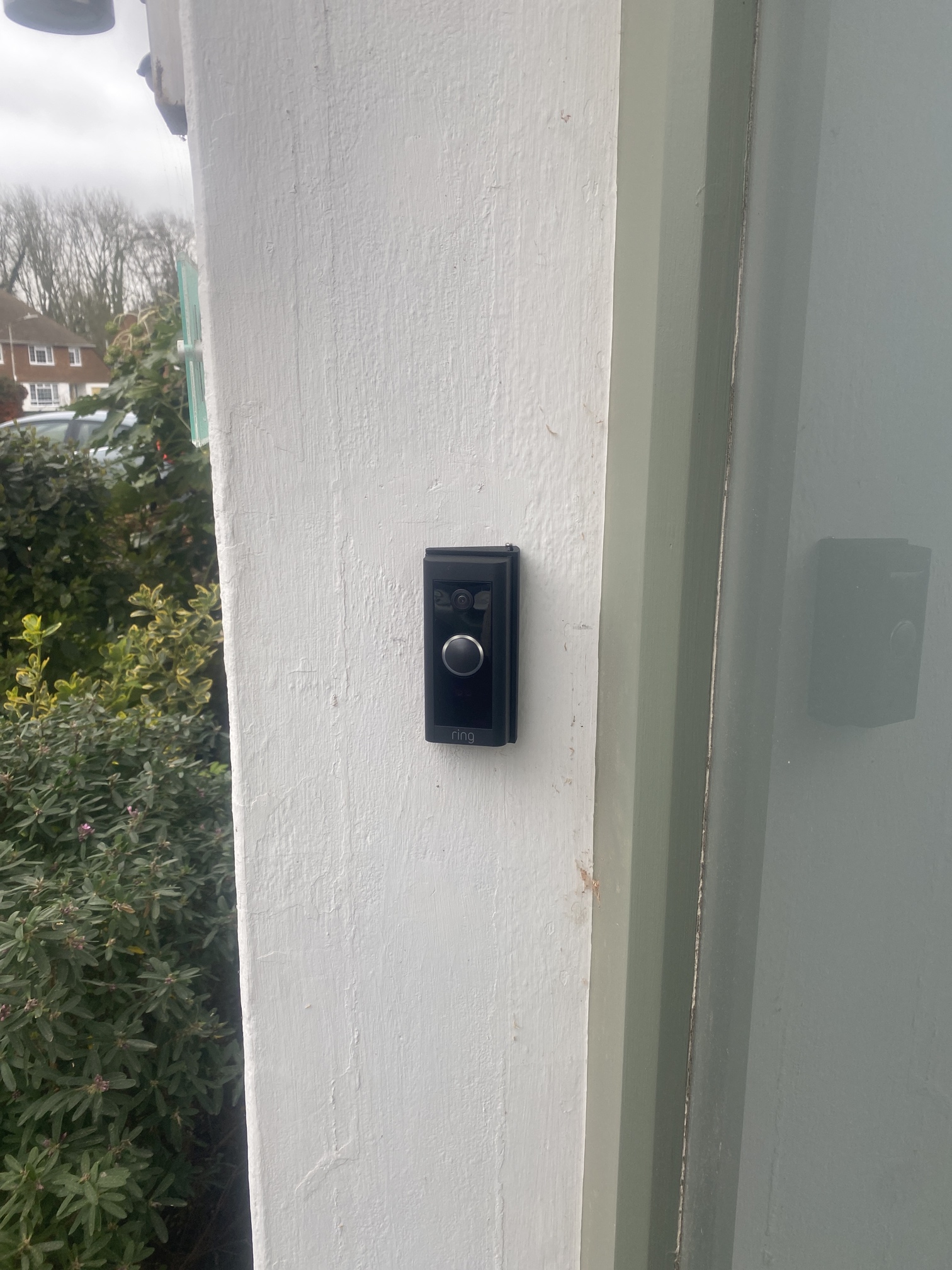
Replacing a like-for-like push is usually quick. Upgrading to a video doorbell, or wiring a doorbell where there wasn't one, takes more thought. Here's how we approach it on site.
Where we've worked on the fixed wiring, such as fitting a new transformer in the consumer unit, we test it and provide the appropriate electrical certificate.
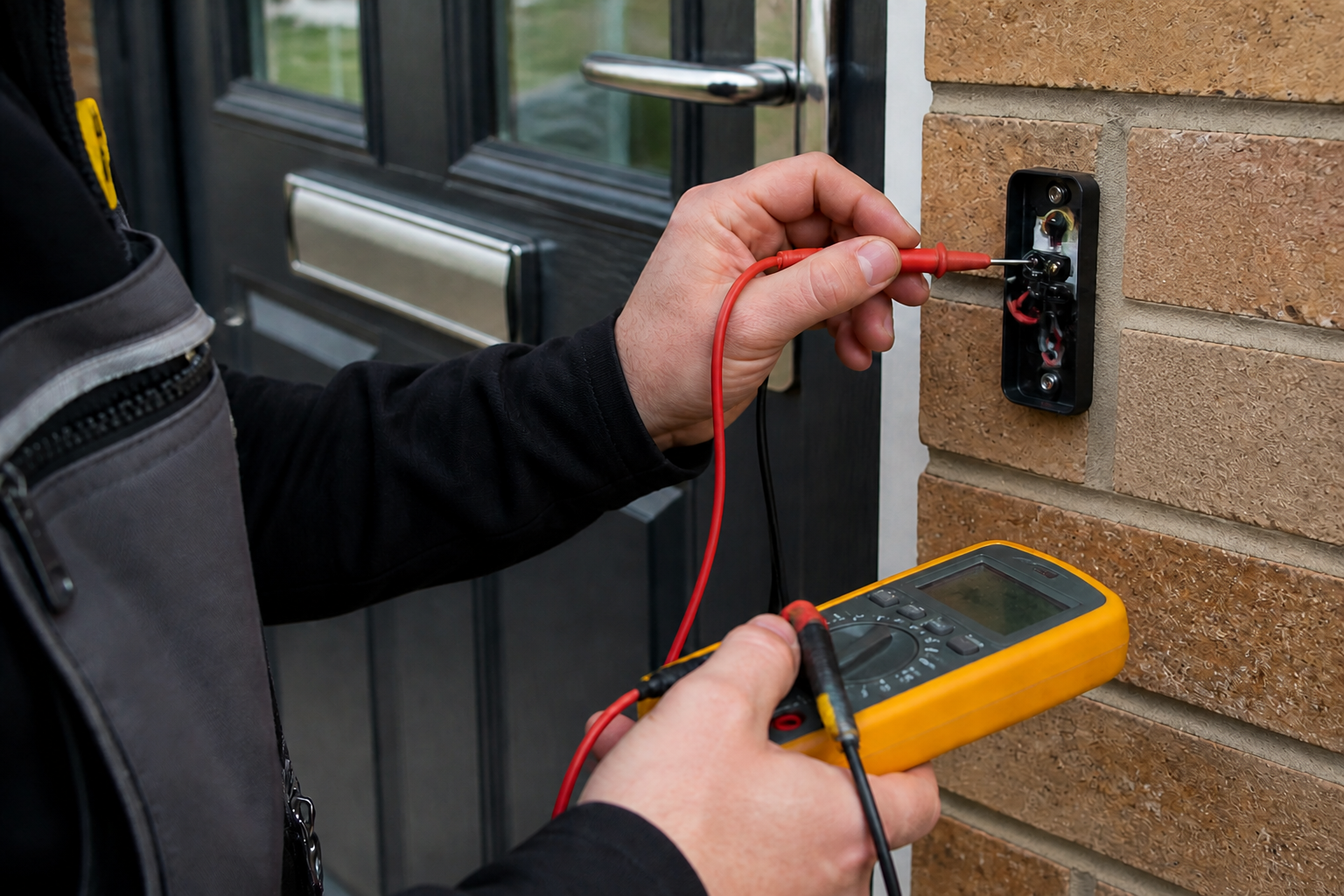
Most doorbell faults come down to a handful of simple causes. Start with the easy checks before assuming the doorbell itself has failed.
|
Symptom |
Likely cause |
What to try |
|
Wireless bell silent or intermittent |
Flat batteries in the push or chime |
Replace batteries in both, then re-pair if needed |
|
Wired bell completely dead |
Transformer failed, or its circuit has tripped |
Check the consumer unit for a tripped breaker; if all looks fine, call an electrician |
|
Bell buzzes or hums but won't ring |
Faulty push or sticking chime mechanism |
Clean or replace the push; check the chime |
|
Video doorbell keeps going offline |
Weak Wi-Fi or an underpowered supply |
Check signal at the door; check the transformer rating |
|
Video doorbell "wired" but battery still drains |
Transformer too small for the doorbell |
Upgrade to a correctly rated transformer |
|
Bell rings by itself |
Damaged or wet push, or a wireless clash with a neighbour's bell |
Replace the push or change the wireless channel |
Battery checks are always step one on a wireless system. Batteries can last for years but they don't last forever, and they tend to fade rather than stop cleanly.
On a wired doorbell, if the push, chime and batteries (if any) are fine, the transformer is the next suspect. Don't open the consumer unit or the transformer housing yourself. Even though the doorbell side runs at a low voltage, the transformer itself is connected to mains.
If your doorbell stopped at the same time as other things in the house, the problem may be bigger than the doorbell. Our Help! No Electricity guide walks you through what to check.
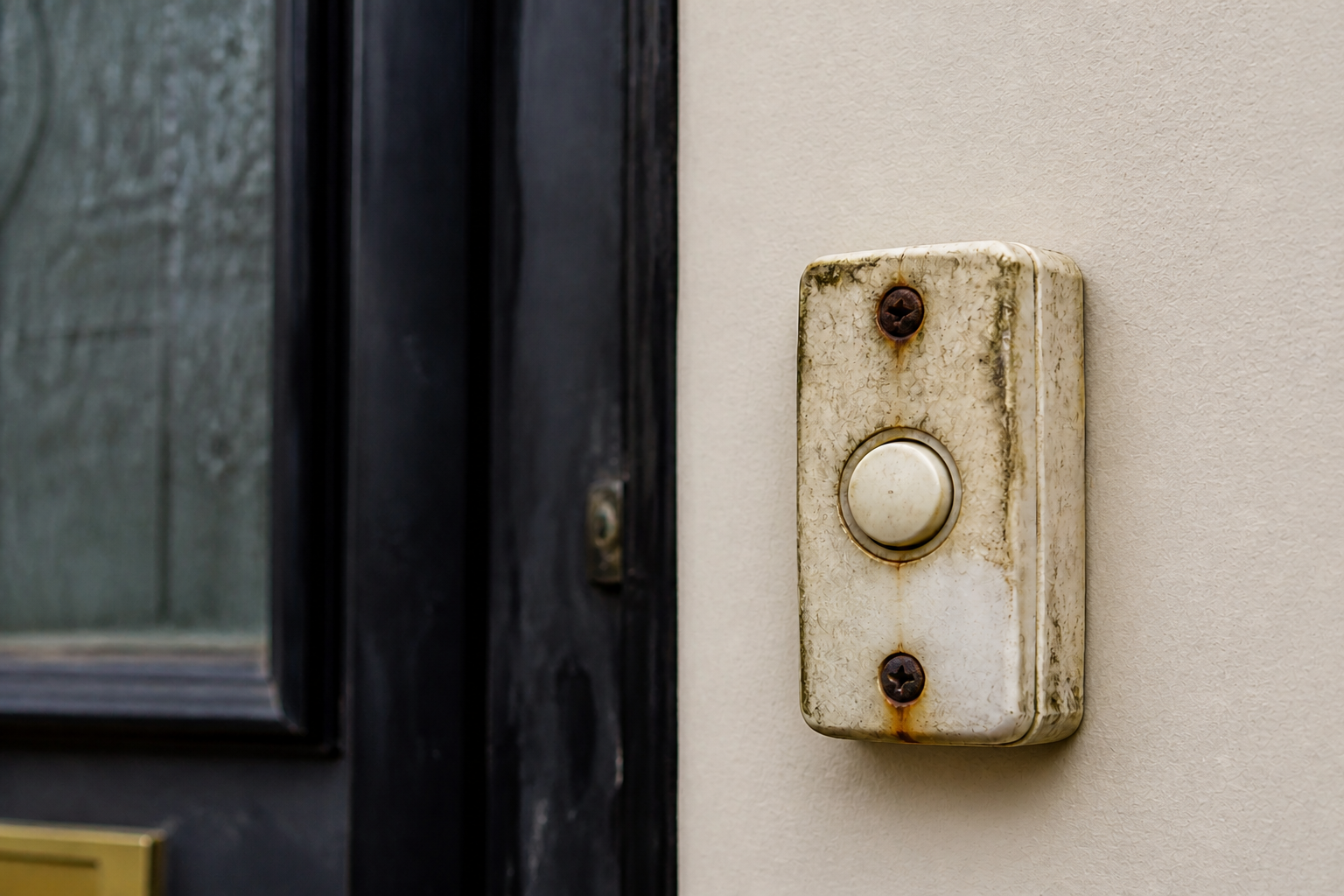
For a battery doorbell, no. It's a screwdriver-and-wall-plug job. For anything that involves the mains side, such as fitting or replacing a transformer, adding a fused spur, or working in the consumer unit, you should use a qualified electrician.
The low-voltage side of a doorbell feels harmless, and it largely is. The risk is in the part you can't see: the transformer connected to your mains supply. We regularly find transformers that have been added by a previous owner with no protection, connected to the wrong circuit, or tucked behind a cupboard with no way to isolate them.
As NICEIC-registered electricians, we fit the right transformer for the doorbell you've chosen, connect it safely, test it, and certify the work where required. If you're having a video doorbell fitted, it's also a good moment to think about security lighting at the front of the house. Better light means better footage at night.
If you haven't had your electrics checked for a while, an EICR will show you whether the rest of your installation is in good shape. See our Electrical Testing section for more.
Often, yes, but the existing transformer may not supply enough power. Most video doorbells need more than an old bell transformer was designed to give. If it's underpowered, the doorbell will drop offline or drain its battery, so the transformer usually needs upgrading.
It depends on the model. Most hardwired video doorbells run somewhere in the 8–24V AC range and need a higher power rating than a basic chime. Check the manufacturer's specification, and have an electrician fit a transformer that matches it.
Usually near the chime, in a cupboard or under the stairs, or as a small module inside or next to the consumer unit. If it's in the consumer unit, leave it to an electrician.
On a wireless bell, it's almost always fading batteries or interference. On a wired bell, it's usually a loose connection, damaged cable at the door frame, or a worn push.
For reliability, yes. A wired doorbell runs from a transformer and never needs a battery change. Wireless is quicker and cheaper to fit and is a good choice where running a cable isn't practical.
Fitting a battery doorbell needs no certification. Where we work on your fixed wiring, such as fitting a new transformer, we test the work and issue the appropriate certificate.
Yes. Where there's no existing cable, we run a new one through the wall so nothing is clipped around the frame. It looks neater and is better protected from weather and damage.
Yes. We install, replace and repair doorbells across Tonbridge, Tunbridge Wells, Sevenoaks, Crowborough and surrounding villages within around 25 miles.
Whether your doorbell has gone quiet, or you've bought a video doorbell and want it fitted properly with the right power supply and no trailing cables, we can help. Bright Spark Electrical Services is an NICEIC-registered contractor covering Tonbridge, Tunbridge Wells, Sevenoaks, Crowborough and the surrounding area.

Call us on 01892 531 728, email karen@brightsparkelectrician.co.uk, or request a quote online.
Thank you very much, and please pass on my thanks to Philip who completed the job. I appreciate it was an awkward space for him to work on, but everything was done so well and so quickly - I am very happy with the outcome! Will be returning to you for more jobs soon I’m sure!
This company was recommended by some people on the Nextdoor website. I wanted new lights installed in my kitchen, dining room and conservatory. Karen got back to me within minutes of my email and both Electricians proved to be efficient, friendly and tidy workmen. I will be keeping their business card handy for future use.
Karen was amazing I can not recommend her highly enough she went over and above my expectations and was indeed a bright spark to my day and helped with love ❤
Terry did a nice job. More importantly my wife said, “He can come here any time.” Praise indeed!
We found the service to be friendly and pro-active. We had an appointment quickly and the engineer was able to find the issue, which was not straightforward, within an hour and rewire the effected ceiling lamp and resolve the issue completely within 2 hours. Very methodical and accurate working - most appreciated!